
2.5 KiB
Word boundary: \b
A word boundary pattern:\b is a test, just like pattern:^ and pattern:$.
When the regexp engine (program module that implements searching for regexps) comes across pattern:\b, it checks that the position in the string is a word boundary.
There are three different positions that qualify as word boundaries:
- At string start, if the first string character is a word character
pattern:\w. - Between two characters in the string, where one is a word character
pattern:\wand the other is not. - At string end, if the last string character is a word character
pattern:\w.
For instance, regexp pattern:\bJava\b will be found in subject:Hello, Java!, where subject:Java is a standalone word, but not in subject:Hello, JavaScript!.
alert( "Hello, Java!".match(/\bJava\b/) ); // Java
alert( "Hello, JavaScript!".match(/\bJava\b/) ); // null
In the string subject:Hello, Java! following positions correspond to pattern:\b:
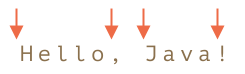
So, it matches the pattern pattern:\bHello\b, because:
- At the beginning of the string matches the first test
pattern:\b. - Then matches the word
pattern:Hello. - Then the test
pattern:\bmatches again, as we're betweensubject:oand a comma.
The pattern pattern:\bHello\b would also match. But not pattern:\bHell\b (because there's no word boundary after l) and not Java!\b (because the exclamation sign is not a wordly character pattern:\w, so there's no word boundary after it).
alert( "Hello, Java!".match(/\bHello\b/) ); // Hello
alert( "Hello, Java!".match(/\bJava\b/) );  // Java
alert( "Hello, Java!".match(/\bHell\b/) );  // null (no match)
alert( "Hello, Java!".match(/\bJava!\b/) ); // null (no match)
We can use pattern:\b not only with words, but with digits as well.
For example, the pattern pattern:\b\d\d\b looks for standalone 2-digit numbers. In other words, it looks for 2-digit numbers that are surrounded by characters different from pattern:\w, such as spaces or punctuation (or text start/end).
alert( "1 23 456 78".match(/\b\d\d\b/g) ); // 23,78
alert( "12,34,56".match(/\b\d\d\b/g) ); // 12,34,56
```warn header="Word boundary pattern:\b doesn't work for non-latin alphabets"
The word boundary test pattern:\b checks that there should be pattern:\w on the one side from the position and "not pattern:\w" - on the other side.
But pattern:\w means a latin letter a-z (or a digit or an underscore), so the test doesn't work for other characters, e.g. cyrillic letters or hieroglyphs.